

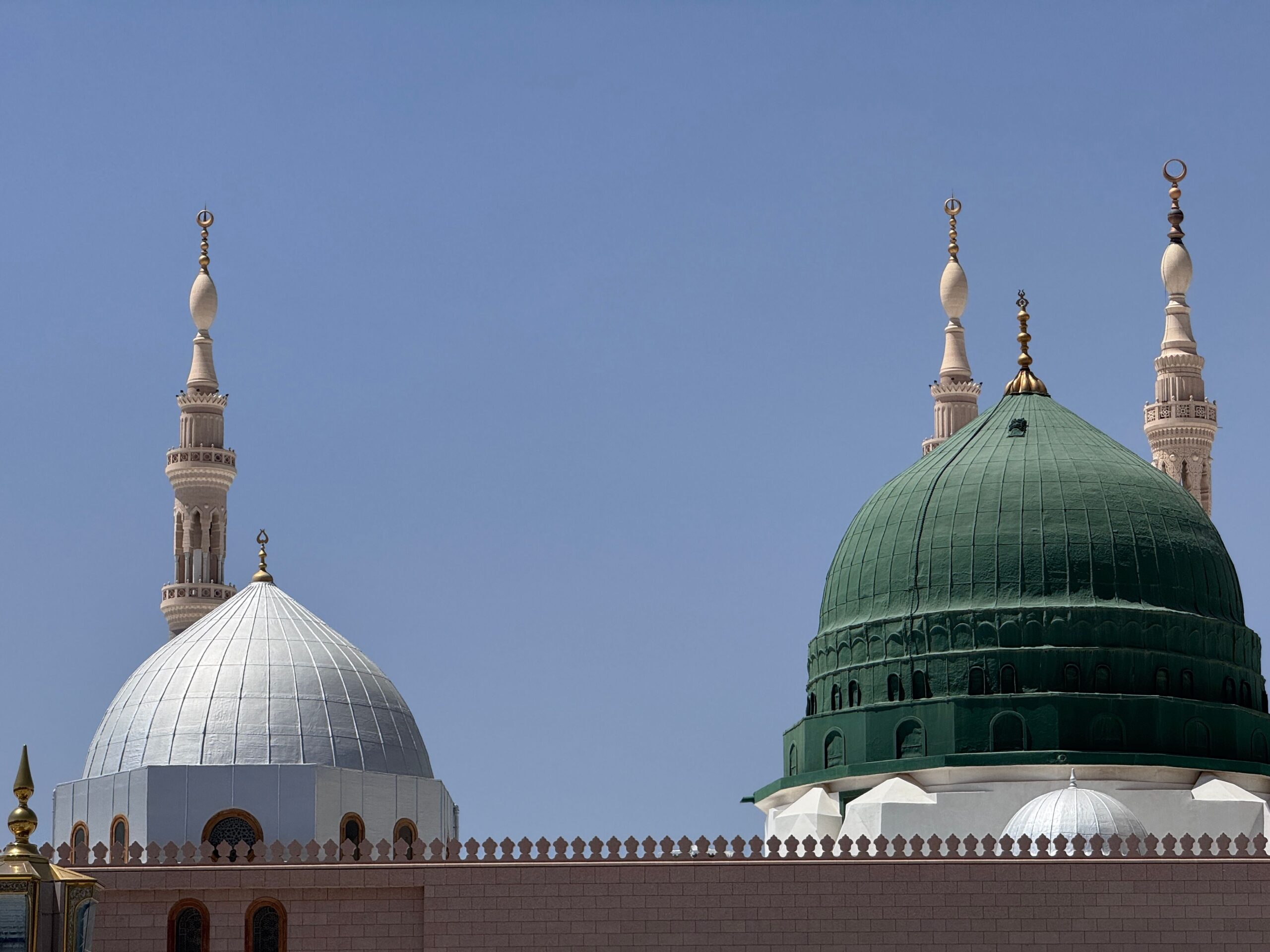
Prophet Muhammad (Peace Be Upon Him) is the final Messenger of Allah and the greatest example for humanity. His life, known as Seerat-un-Nabi, is a complete guide for people seeking righteousness, justice, compassion, and faith. Through his words and actions, he taught the values of honesty, patience, forgiveness, and kindness, leaving a legacy that continues to inspire millions around the world.
Prophet Muhammad (PBUH) was born in Makkah in the Year of the Elephant, around 570 CE. His father, Abdullah, passed away before his birth, and his mother, Amina, died when he was still a young child. He was raised by his grandfather and later by his uncle, Abu Talib. Despite facing hardships in childhood, he grew up with excellent character and earned the titles Al-Amin (the Trustworthy) and As-Sadiq (the Truthful) because of his honesty and integrity.
At the age of twenty-five, Prophet Muhammad (PBUH) married Khadijah (RA), a respected and noble businesswoman. Their marriage was based on love, trust, and mutual respect. Khadijah (RA) became his greatest supporter and stood by him during the earliest and most difficult days of his mission.
When Prophet Muhammad (PBUH) reached the age of forty, Allah chose him as His Messenger. While meditating in the Cave of Hira, he received the first revelation through Angel Jibreel (Gabriel). He was commanded to spread the message of the Oneness of Allah and to call people towards justice, morality, and worship of the Creator alone. Although many people opposed him and persecuted his followers, he remained patient and steadfast.
The Prophet (PBUH) faced many hardships during his mission. He and his companions suffered insults, social boycott, and physical persecution. Despite these challenges, he never responded with hatred or revenge. Instead, he showed mercy and forgiveness. His patience and strong faith encouraged many people to accept Islam.
In 622 CE, Prophet Muhammad (PBUH) migrated from Makkah to Madinah, an event known as the Hijrah. This migration marked the beginning of the Islamic calendar. In Madinah, he established a society based on justice, equality, and cooperation. He united different tribes and communities, proving that peaceful coexistence and mutual respect are essential for a strong society.
One of the most remarkable qualities of Prophet Muhammad (PBUH) was his mercy. He cared deeply for the poor, the orphans, the elderly, and the weak. He treated everyone with kindness and respect, regardless of their social status. Even those who opposed him often admired his honesty and noble character. His teachings emphasized helping others, speaking the truth, and maintaining strong family and community ties.
Before his passing, Prophet Muhammad (PBUH) delivered his Farewell Sermon, in which he emphasized equality, justice, and respect for the rights of all people. He reminded Muslims to hold firmly to the teachings of the Quran and his example. His message highlighted that no person is superior to another except through righteousness and good deeds.
In conclusion, the life of Prophet Muhammad (PBUH) is a timeless source of guidance for all humanity. His honesty, patience, compassion, and devotion to Allah continue to inspire people across generations. By following his example in our daily lives, we can become better individuals and contribute to a more peaceful, just, and caring society. His Seerah remains a shining light for those who seek success in this world and the Hereafter.
Leave A Comment